

The Resistance Fighter Behind Miss Dior: Catherine Dior’s War and Why History Nearly Forgot Her
Most people recognize the name Dior. They know the fashion house, the iconic perfumes, the elegance that Christian Dior brought to post-war Paris. Many have heard of Miss Dior, the fragrance that launched in 1947 and became one of the world’s most famous perfumes.
But few know about the woman it was named for. Catherine Dior, Christian’s younger sister, was a French Resistance hero who was arrested, tortured, and survived Ravensbrück concentration camp. She endured horrors that left her physically and psychologically scarred for life.
And when she returned to Paris in 1945, even as her brother became one of the most famous men in the world, she remained largely invisible. But how does a woman who fought for France, who was decorated by three countries for her courage, who inspired one of the most iconic perfumes ever created, become a footnote in history?

The Dior Family Before the War
Ginette Dior, who later took the name Catherine, was born on August 2, 1917, in Granville, Normandy. She was the youngest of five children and twelve years younger than Christian. The age gap meant they grew up in different worlds, but they shared something important: a love of flowers and gardening inherited from their mother, Madeleine.
The early years were comfortable. Their father, Maurice, ran a successful fertilizer business, and the family lived well. But the 1929 Wall Street crash destroyed Maurice’s fortune. Then in 1931, when Catherine was just thirteen, her mother died suddenly. The family was forced to relocate to Callian, near Grasse in Provence, where they struggled to survive.
Catherine spent her teenage years growing vegetables to sell at the local market. She knew what it meant to work with her hands, to be practical, to make do. Unlike her siblings, she never experienced the privilege of the family’s wealthy years. She was, as one historian put it, the working-class Dior. The rebel child.
By the late 1930s, Christian had found work in Paris as a fashion designer. Catherine eventually joined him there, selling hats and gloves in a fashion shop and sharing an apartment on Rue Royale. Then war came. Christian was called up for military service in 1939 but saw no action. After France surrendered in June 1940, Catherine returned to Provence with her father.

Meeting Hervé and Joining the Resistance
In November 1941, Catherine walked into a radio shop in Cannes. She wanted a radio so she could listen to BBC broadcasts, including those of General Charles de Gaulle, the French hero leading the Free French government in exile from London. Listening to these broadcasts was a serious offense under Vichy law. You could be arrested, imprisoned, or worse.
The shop was managed by a man named Georges Papillault, Baron des Charbonneries, known to friends as Hervé. He was thirty-six years old, married, and had three children. He was also a member of F2, a British-funded Franco-Polish Resistance intelligence network operating in southern France.
Catherine fell in love with him. And she joined the Resistance.
By July 1943, she was officially part of F2, working under the code name “Caro.” Her role was dangerous. She gathered intelligence, typed up reports, and acted as a courier, biking through the countryside to note German troop movements and take photographs. She transmitted clandestine reports to London. The intelligence F2 provided was vital to planning the Allied invasion of France.
Catherine also used Christian’s Paris apartment as a meeting place for Resistance members. Christian knew what she was doing. He allowed it, fully aware that sheltering Resistance fighters put his own life at risk. He supported his sister even though he wasn’t formally part of the Resistance himself.
Military files note Catherine’s work with the F2 network’s Cannes office. During a Gestapo raid, she hid incriminating materials and then delivered them safely to another member of the network. The records describe her “composure, decisiveness, and sang-froid.” She worked across the entire Mediterranean zone, covering vast territory and taking enormous risks.

Arrest and Torture
On July 6, 1944, Catherine went to the Place du Trocadéro in Paris at 5 pm to meet a female contact. The meeting was a trap. Instead of her contact, four armed men were waiting. They were French Gestapo, French collaborators who the Nazis had deputized to hunt down Resistance members.
Her entire circuit had been betrayed. Twenty-seven people were arrested that day, including the legendary Jean Desbordes, who would be tortured to death. Catherine was driven to 180 Rue de la Pompe, an elegant building in the 16th arrondissementthat had been turned into a torture center.
The Rue de la Pompe gang was led by Friedrich Berger, a German officer, but staffed largely by French collaborators. They were brutal. Catherine later gave testimony about what happened to her there.
“When I arrived in the building, I was immediately subjected to an interrogation on my activities for the Resistance and also on the identity of the chiefs under whose orders I was working. This interrogation was accompanied by brutalities: punching, kicking, slapping, etc. When the interrogation proved unsatisfactory, I was taken to the bathroom. They undressed me, bound my hands, and plunged me into the water, where I remained for about three-quarters of an hour.”
The water was icy cold. They submerged her completely, bringing her to the point of drowning, then pulled her out and questioned her again. Then they did it again. And again. The torture destroyed her fertility. She would never be able to have children.
The French Resistance considered it a success if their members could stay silent for twenty-four hours under torture. That gave others time to flee and regroup. Catherine never broke. She never revealed the names of anyone in her network. She saved Hervé, his wife Lucie, and countless others. By the time the Gestapo reached F2 headquarters, everyone had escaped.
Years later, another Resistance member who had been tortured at Rue de la Pompe scratched a message on the cellar wall with his fingernails: “We have been tortured by the French people.”
Christian’s Desperate Attempts to Save Her
When Christian discovered where Catherine was being held, he did everything he could to get her released. He contacted everyone he knew. He used his connections with the wives and mistresses of Nazi officers, women he dressed at his job. He reached out to Raoul Nordling, the Swedish consul-general, who was negotiating the release of political prisoners.
On August 18, 1944, Nordling managed to convince the Nazis to place Catherine under the protection of the Swedish state. But he was too late. She had already been deported three days earlier, on August 15, on one of the last trains leaving Paris for Germany.
Paris would be liberated by Allied forces just ten days later. She missed freedom by less than two weeks.
The Journey to Ravensbrück
After the torture at Rue de la Pompe, Catherine was transferred to Fresnes prison just outside Paris. Then, at the end of July, she and other women prisoners were moved to Romainville on the outskirts of the city. By this time, US troops had taken Avranches in Normandy and opened the way to Paris. The prisoners hoped they might be liberated before being sent to Germany.
On August 15, 1944, they were loaded onto a train. The journey took a week. There was no water, no food, no sanitation. American Virginia d’Albert-Lake, another Resistance member on the same transport, described the bus journey through the crowded streets of Paris before they reached the train. People stared at the women on board, some with looks of pity on their faces.
Catherine arrived at Ravensbrück concentration camp on August 22, 1944. She was assigned prisoner number 57813. Twenty-three other women who had been tortured at Rue de la Pompe ended up at Ravensbrück alongside her. Some of them would die there.

Ravensbrück: Hitler’s Women’s Camp
Ravensbrück was located about fifty miles north of Berlin in northern Germany. It was the only concentration camp the Nazis designed exclusively for women. The SS had opened it in May 1939, originally planning for a capacity of 6,000 prisoners.
By the time Catherine arrived in August 1944, there were already 40,000 women interned there. The camp was severely overcrowded. Between 1939 and 1945, approximately 130,000 women and children passed through Ravensbrück. An estimated 50,000 died.
The prisoners came from more than thirty countries. Polish women made up the largest group, followed by Soviet, German, Hungarian, French, and Czechoslovak prisoners. They included political prisoners, Jews, Roma, Jehovah’s Witnesses, lesbians, and so-called asocials.
Conditions were brutal. Pre-dawn roll calls meant standing for hours in freezing weather. The barracks were infested with lice. Rations were inadequate, and starvation was constant. Women were beaten regularly. Disease spread rapidly through the overcrowded camp.
The SS forced prisoners to work as slave laborers. Siemens built twenty workshops just outside the camp perimeter where women produced electrical components for the war effort. Inside the camp, prisoners sewed uniforms, repaired equipment, and worked on punishment details.
Between 1942 and 1943, a group of young Polish women, later known as the “Rabbits,” were subjected to horrific medical experiments. Doctors infected them with bacteria, performed bone transplants, and carried out amputations to test various treatments.
In the fall of 1944, as Hungarian Jewish women arrived from Auschwitz, there was nowhere to house them. The SS erected a massive tent with a straw floor. Women lay in their own filth in freezing temperatures. They died by the hundreds. Up to three thousand women were left to perish with virtually no water, food, or blankets.
In early 1945, the SS constructed a gas chamber near the crematorium. Between 5,000 and 6,000 women were gassed at Ravensbrück before Soviet troops liberated the camp.

Catherine’s Experience in the Camp
Catherine spoke only once to her godson, Nicolas Crespelle, about what she experienced there. She told him she would never fall to the ground to pick up food thrown by an SS guard. “If you did that, your life was over,” she said. Maintaining self-respect and some sense of dignity was a form of survival.
She witnessed fellow prisoner Elisabeth de Rothschild, a member of the famous banking family, die in the camp. De Rothschild had been arrested after refusing to sit next to the German ambassador’s wife at a Schiaparelli fashion show. That act of defiance cost her everything.
What kept Catherine alive was partly luck, partly the help of other prisoners. Women formed bonds of sisterhood in the camp. They looked out for each other when they could. Small acts of kindness, sharing information, helping someone too weak to stand. It all mattered.
Transfers Through the Camp System
In September 1944, Catherine was transferred from Ravensbrück to Torgau, a military prison where she was assigned to the all-female Anton Kommando. She worked producing explosives in a disused potassium mine. The work was dangerous and exhausting.
In October 1944, she was sent to Abteroda, one of Buchenwald’s satellite camps. There she slaved alongside other starved, emaciated women, working twelve-hour shifts making parts for BMW. The conditions were no better than Ravensbrück. Women died from exhaustion, disease, and despair.
In late February 1945, Catherine was moved again, this time to a factory at Leipzig-Markkleeberg that produced aircraft parts. By this point, the Allied forces were closing in from all sides. The Germans were running out of time and territory.
The Death March and Liberation
On April 13, 1945, SS officers at Markkleeberg received orders to evacuate the prisoners. The word “evacuation” was a euphemism. What they meant was a death march. Thousands of concentration camp prisoners were forced to walk toward what remained of Nazi-controlled Germany to prevent the advancing Allies from finding living witnesses who could testify about what had happened in the camps.
One in three prisoners died on these marches. They collapsed on roadsides from exhaustion, starvation, or were shot by guards when they couldn’t keep up.
On April 21, 1945, Catherine escaped from the death march near Dresden. She and several other women managed to slip away. Soviet troops liberated them, though liberation came with its own trauma. Many women survivors of Ravensbrück were raped by Soviet soldiers.
Catherine spent two weeks trying to make her way home on her own before American soldiers found her near Dresden. She was hospitalized for a month. When she was finally stable enough to travel, she made her way back to Paris.
Return to Paris
Catherine arrived at the Gare de l’Est in late May 1945. Christian was waiting for her on the platform. He didn’t recognize her at first because she was so emaciated.
He’d been saving up his rations for weeks to make her a soufflé, a gesture of love and welcome. But when he served it to her, she couldn’t eat it. Her stomach couldn’t handle food after months of starvation. The simplest meal was too much.
The physical damage was extensive. She had injuries to her hips, back, and feet. She suffered from chronic arthritis, rheumatism, and kidney problems for the rest of her life. But the psychological scars ran deeper. She battled insomnia, nightmares, memory loss, anxiety, and depression. Like so many survivors, she had severe PTSD long before that term existed.

Life After the War
Catherine reunited with Hervé des Charbonneries, and they became flower sellers together, waking at 4 am every morning to go to the flower market at Les Halles in Paris. They worked side by side, selling roses, lilies, and jasmine.
Catherine never married Hervé, and he never divorced his wife Lucie, though they separated amicably. But Catherine and Hervé remained devoted to each other until he died in 1989. It was a love affair that lasted nearly fifty years, born in wartime and sustained through everything that followed.
Eventually, Catherine moved back to Callian in Provence, the place where she’d grown vegetables as a teenager after her family lost everything. She was granted a government license as a Mandataire en fleurs coupées, which allowed her to deal in cut flowers internationally. She bought a rose farm and spent the rest of her life among the flowers she and Christian both loved.
Christian’s death in 1957 was a great sorrow to her. He was only fifty-two when he died of a heart attack, but Catherine lived a long life. She became godmother to four children, including Nicolas Crespelle, who remembered her with love and admiration. She lived quietly, surrounded by roses and the landscape of Provence.

Miss Dior: The Perfume and the Tribute
On December 12, 1947, Christian Dior launched his first perfume. He’d been discussing various names with his team when Catherine walked into the room. Mizza Bricard, one of Christian’s closest collaborators, looked up and said, “Look, here’s Miss Dior.”
Christian said, “Miss Dior. That’s my perfume.”
The fragrance was a tribute to Catherine, to everything she’d done during the war, to her survival, to her love of flowers. It became one of the most iconic perfumes in the world. Millions of people have worn it without knowing the story behind the name.
In 1949, Christian created a dress in his collection called Miss Dior, a true tribute to Catherine’s passion for flowers. The full skirts, the emphasis on femininity, the beauty and romance, all of it connected back to flowers and to his sister.
It’s worth noting that Christian didn’t open his own fashion house until after Catherine’s safe return. He’d spent the war working for other designers, waiting, hoping. Only when she came home did he move forward with his own ambitions. She was his inspiration in more ways than one.

The 1952 Trial
In November 1952, the members of the Rue de la Pompe gang were finally brought to trial. Christian persuaded Catherine to testify. It was an act of incredible courage, given how traumatic it was for her to speak about what had happened.
She appeared in court and gave detailed testimony about the torture she’d endured. When she identified Théodore Leclerq as one of her torturers, his lawyer insulted her, claiming she’d mistaken him for two different men. This was the treatment she received for bearing witness.
Only eight of the twelve French collaborators were sentenced to death, and just three were actually executed. Three men received life sentences of hard labor. The one woman torturer received twenty years. The German SS officer who had supervised the torture at Rue de la Pompe got five years, and his German assistant received three.
These were the men and women who had tortured Resistance fighters, some to death. These were people who had sent Catherine and others to concentration camps, and they received minimal punishment.
What’s even more striking is that Catherine testified at the height of Christian’s fame. He was one of the most famous men in the world by 1952, and his designs were worn by movie stars and royalty. Yet when Catherine appeared in court, not a single journalist made the connection. The newspapers reported on the trial, but they didn’t mention that one of the witnesses was Christian Dior’s sister.
Awards and Recognition
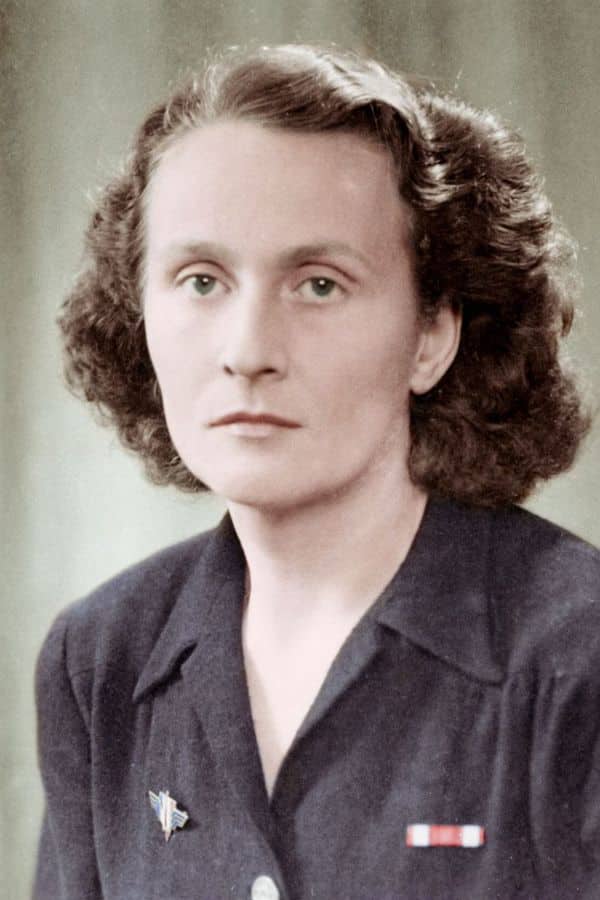
Catherine received some of France’s highest honors for her service in the Resistance. The French government awarded her the Croix de Guerre and the Croix du Combattant Volontaire de la Résistance. She was made a Chevalière of the Legion of Honor.
Britain awarded her the King’s Medal for Courage in the Cause of Freedom, and Poland gave her the Cross of Valour. She was among the most decorated French Resistance fighters of the war.
But decorations don’t capture what it cost her. The years of pain, the nightmares, the children she could never have, the trauma that never fully left her. She paid a price that no medal could acknowledge.
Why Was She Forgotten?
Like many women who worked for the Resistance, Catherine was deeply reticent. In the years immediately after the war, most survivors didn’t want to discuss their experiences. They felt that people didn’t want to know, that France wasn’t ready to hear what they’d endured.
The complexity of collaboration and resistance was too painful for the country to address. So many French people had collaborated in some way, whether actively or passively. So many had looked the other way. Examining what the women of the Resistance had suffered meant examining what France as a whole had failed to do.
The House of Dior didn’t publicly reference Catherine’s Resistance activities until 2011, three years after her death. For decades, she was known only as the inspiration for Miss Dior perfume, if she was known at all. The fashion house honored the perfume but kept silent about the woman behind it.
Catherine herself wasn’t interested in the limelight. She never became a fashionista or tried to share in her brother’s fame. She was fiercely proud of Christian and protective of his legacy, but she didn’t need Dior clothes to define her. She knew who she was, and she’d walked through hell and come back.
Miss Dior: A Wartime Story of Courage and Couture

Miss Dior is a story of freedom and fascism, beauty and betrayal, roses and repression, and of how the polished surface of fashion conceals hidden depths. Buy Miss Dior by Justine Picardie >>>
Catherine’s Legacy Today
In 2019, Maria Grazia Chiuri, then creative director at Christian Dior, dedicated the Spring-Summer 2020 Ready-to-Wear collection to Catherine. It was inspired by her passion for flowers and her courage.
In 2021, journalist Justine Picardie published Miss Dior: A Story of Courage and Couture, a comprehensive biography that finally told Catherine’s full story. Picardie spent years researching in archives across France, Poland, Britain, and Germany, piecing together what had happened to Catherine and the other women who shared her experience.
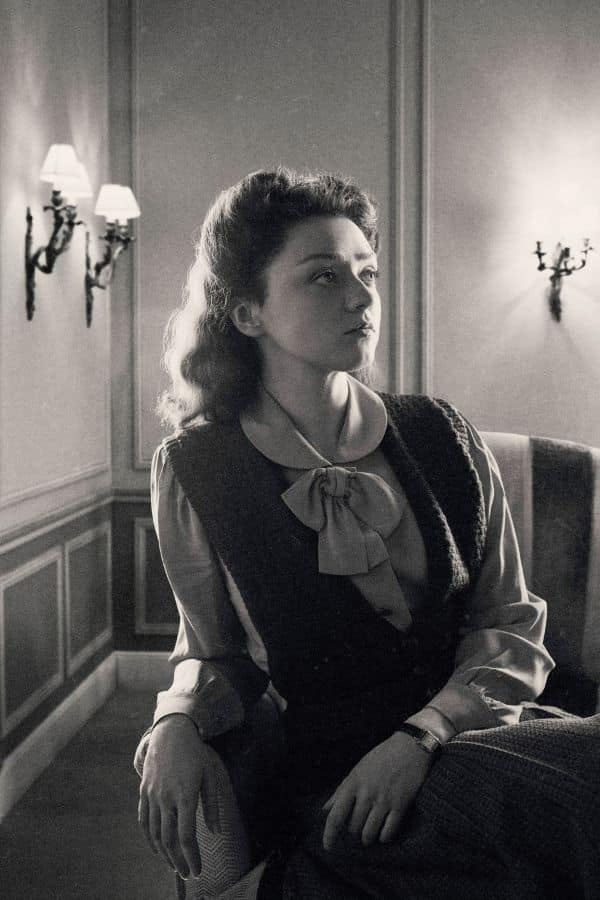
In 2024, Apple TV+ released The New Look, a series about Christian Dior’s rise to fame, with actress Maisie Williams portraying Catherine. Williams lost approximately twenty-six pounds to embody the emaciated Catherine who escaped from the death march. She was the same age Catherine had been when she was arrested.
Catherine Dior died in 2008 at the age of ninety-one. She lived long enough to see the fall of the Berlin Wall, the reunification of Germany, and the transformation of Europe. She outlived the Reich that tried to break her by more than sixty years.
TRAVELLING TO FRANCE?
Here are my favourite resources I use each time I travel!
🧳 I always protected my trips with this travel insurance company when I lived in the US AND this one now I live in Europe
🚘 I found a car rental for $500 less than traditional sites with this car rental agency
🚌 🍷 My favourite platform to find Day Trips and Wine Tours in France at the best price and with great reviews
🚂 The cheapest train tickets are always on this App
🏨 I got a 20% discount on a chateau hotel with this hotel booking tool
I personally use these sites myself and if you use them, they will earn me a small commission at no extra cost to you. This helps reduce the ever-increasing cost of maintaining my blog and writing about France. Thank you!