

The Unwritten Rules of the French Etiquette of Daily Life and How It’s So Easy To Get It Spectacularly Wrong
I’ve been living in France since 2016, and I’m still getting it wrong. There is a whole layer of unwritten French etiquette rules that nobody hands you at the border, and stepping on them can earn you a look so withering you’ll feel it for days.
The French have a term, savoir-vivre, which translates loosely as “knowing how to live.” It’s a social code that governs everything from how you greet people to how you ask for butter at dinner. And it turns out, most of us foreigners have been getting chunks of it spectacularly wrong.
But the French, in my experience, are more forgiving of foreigners making these mistakes than their reputation suggests, as long as you’re clearly making the effort. The ladies in my line dancing group seem to find everything I say in French highly amusing, and I’m pretty sure it’s not because I’m funny!

The Unwritten Rules of French Etiquette
So what are the rules in France? What should you say and what shouldn’t you? Is it really so wrong to ask for butter with your bread? And, for the love of God, do we really have to fill forms out in triplicate in order to get anywhere? Let’s find out.
Avoid the Word Enchanté
You’ve probably heard enchanté used as a greeting when meeting someone for the first time, the French equivalent of “pleased to meet you.” I’ve heard it in movies, and dare I say, it does sound a little romantic. The problem is that in polite French society, it’s considered the opposite.
Enchanté is an abbreviation of a longer, more elaborate phrase, and shortening it marks you as someone who doesn’t know the full version. It signals coarseness, not sophistication.
What should you say instead? Simply bonjour, followed by your name. That’s it. Clean, simple, and correct.
Bon Appétit Is Also a Problem
Yes, really. Sorry, Julia Child.
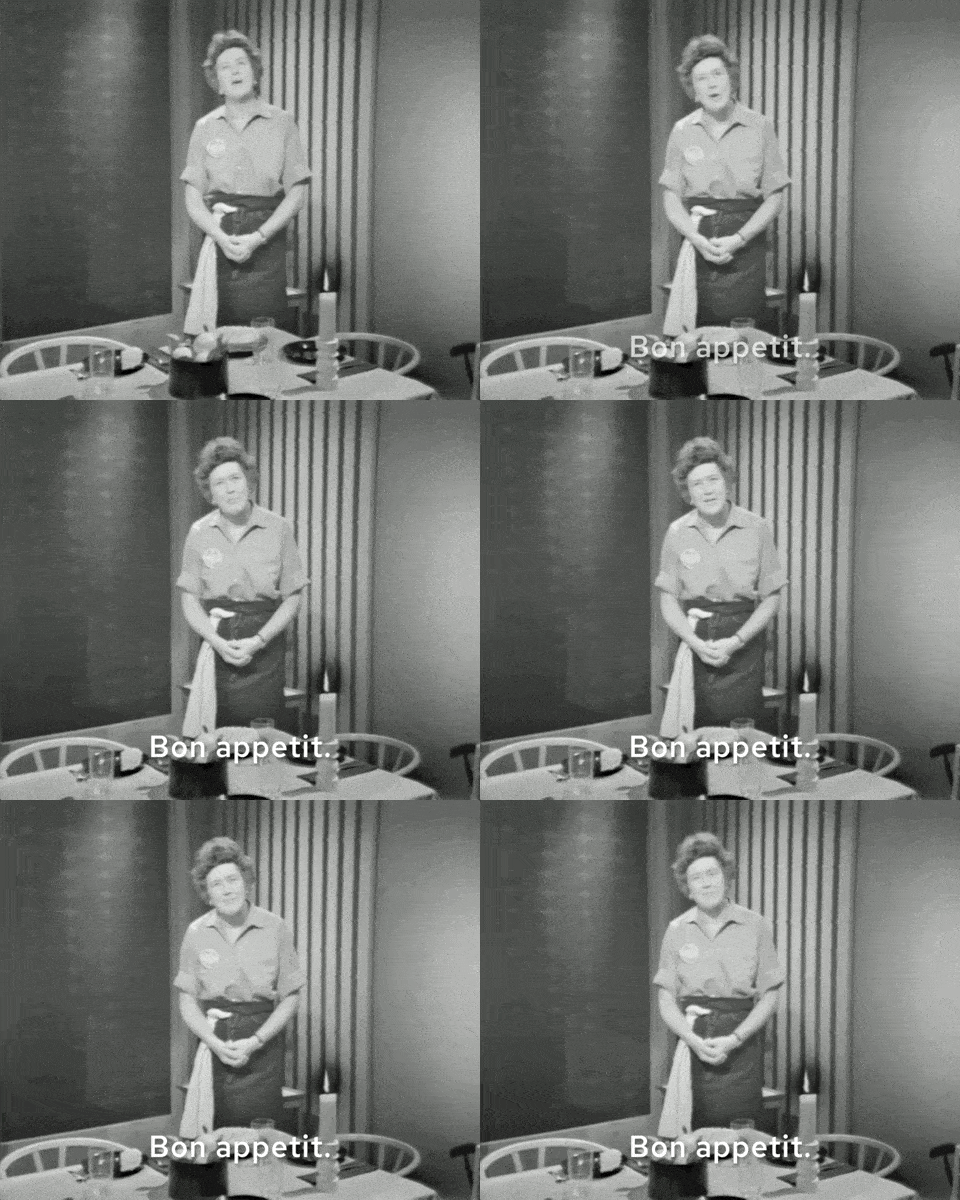
This is the one that gets everyone, because bon appétit sounds like the most French thing you could possibly say before a meal. Turns out, it implies you’re wishing someone comfort for the discomfort of eating, which in certain circles is considered a little vulgar.
Whether you’ll actually offend anyone by saying it depends very much on where you are and who you’re with. In rural France, around a farmhouse table with neighbors, you’re probably fine. At a formal dinner in a grand bourgeois house? Maybe keep it to yourself.
The safe alternative is simply to raise your glass if there’s wine, which there almost always is in France, and wait for the host to signal the start of the meal.
Bonjour Isn’t Optional. It’s Mandatory.
You might think this is obvious. It is not obvious to many visitors, and the French notice every single time.
Before you ask for anything in a shop, bakery, or market, you say bonjour. Before you ask a stranger for directions, you say bonjour. Before you order at a café, you say bonjour. Not doing so is the equivalent of walking up to someone and demanding things without acknowledging them as a human being first.
In rural France, I’ve found this applies everywhere. The tabac, the pharmacy, the post office. Even the guy at the agricultural supply store. Skipping the bonjour will get you a curt response at best and full-on Gallic frost at worst.
One small detail that trips people up: if you arrive somewhere after midday, it’s bonsoir, not bonjour. I once said bonjour to a shop owner at 6 pm and watched her face do something I can only describe as a polite wince.
I still forget and waltz into line dancing nearly every week at 7 pm, saying “Bonjour tout le monde.”

Bonjour Messieurs, Dames: Watch Where You Use It
Speaking of bonjour, there’s a variation that sounds friendly but can raise eyebrows in the wrong setting.
In some parts of France, particularly in the south, you’ll hear people walk into a butcher’s shop or market stall and cheerfully announce “Bonjour, messieurs, dames,” addressing everyone in the room at once. It sounds inclusive and warm.
But it’s considered unsophisticated in certain French circles, particularly among Parisians and the upper classes. It can immediately put you on the naughty list and ensure you never receive an invite to dinner again.
Don’t stress too much about this one, as it really does depend on where you are and who you’re with. In rural France, in a market, among locals, nobody is going to faint. But if you’re heading into more formal settings, keep it to a simple bonjour directed at whoever is in front of you.

The Butter Rule
This one I find baffling, but here we are.
In France, you do not put butter on your bread at dinner. Butter at the table is for breakfast only, and occasionally, if you’re eating oysters. That’s it. Bread at dinner is eaten plain, used to mop up sauce, and that’s the deal.
To me, it’s a sacrilege because both the butter and bread are so good here that they deserve to be together. But there you have it. Either take your own stash with you or risk the outraged look you receive from the waiter. Although in the bigger cities, they’re more used to it.
Tu vs. Vous: The Ongoing Minefield
If you’ve spent any time studying French, you know that vous is the formal “you” and tu is the informal version. What nobody really prepares you for is how socially loaded getting it wrong can be.
Using tu with someone who expects vous can come across as disrespectful, too familiar, or just plain rude, depending on the person and the situation. In rural France, I default to vous with anyone I don’t know well, any shopkeeper, official, or neighbor I’ve only met once or twice. Switching to tu usually happens naturally over time, but I always wait for the other person to make the first move.
The rule of thumb here is when in doubt, use vous.

Don’t Rush the Meal. Ever.
In the US and the UK, restaurants often work to a slot system. You have a table for two hours, and the bill arrives as a reminder that time is nearly up.
France doesn’t operate this way. Le dîner is its own event. Sitting down at 7 pm and leaving at 11 pm is completely normal. Rushing through courses is rude. Asking for the bill before you’re ready insults the experience. The meal is the point of the evening, not just the food.
This took me a while to adjust to, especially in the early days of living here. Now I can’t imagine eating any other way. In France, you appreciate your food and take your time over it, and it heightens the whole experience.
The French Dress Code Is Real
Sunday best is mostly dead in the UK and the US. In France, making an effort with your appearance before leaving the house is still considered a basic courtesy to those around you.
This doesn’t mean formal wear for a trip to the market, but it does mean you get dressed properly. Presentable. Put together. Showing up somewhere in your rattiest weekend clothes sends a message, and not the one you want.
Among younger French people, trainers are often off the table entirely for social occasions, even casual ones. A smart shirt, leather shoes or clean boots, jeans at a push. But scruffy trainers with a social outing? Non.
Never Talk About Money
In France, discussing money is considered deeply impolite. What you earn, what you paid for your house, and what something costs you. All of it is off limits in social conversation. This might be acceptable in the US, but in France, it remains firmly in the category of things you simply do not do.
French social status has historically been tied to family background and profession, not bank balance. Mentioning how much you paid for something, especially if the price is impressive, will earn you a slightly pained silence.

Never Arrive on Time to a Dinner Party
This one is counterintuitive if you’ve been raised to believe that punctuality is a virtue.
In France, showing up exactly on time to someone’s home for dinner is actually considered slightly rude. It puts pressure on the host, who almost certainly isn’t quite ready. The accepted practice is to arrive about 10 to 15 minutes late. This is so well understood that the French even have a name for it: le quart d’heure de politesse, the quarter hour of politeness.
Do not, however, arrive early. That is considerably worse than being on time.

The Formal Side of France
France runs on paperwork. Not digital paperwork. Actual, physical, printed, signed, stamped, photocopied paperwork. Every administrative task, from getting a residency permit to changing your address, requires a dossier. That’s a file of documents, each one specific, each one current, and often each one already submitted elsewhere. They want it again. In triplicate. With a translation.
I once needed a birth certificate, an apostilled birth certificate, a translated apostilled birth certificate, proof of address no older than three months, two passport photos in a very specific format, and a completed form I could only find on a government website that hadn’t been updated since 2009. And that was just to open a bank account.
The French administrative system has its own pace, and that pace is not fast. If someone tells you a process takes six weeks, budget for twelve. If they say they’ll call you back, they might, they might not. The préfecture appointment you need may not be available for two months.
What I’ve learned is that patience and politeness are your only tools here. Showing up flustered or demanding gets you nowhere. Showing up with your dossier perfectly organized, speaking as much French as you can manage, and smiling through the whole thing? That tends to work marginally better.
It’s maddening, but there it is. The rules apply to everyone equally, and nobody, regardless of status, gets to skip the queue.
TRAVELLING TO FRANCE?
Here are my favourite resources I use each time I travel!
🧳 I always protected my trips with this travel insurance company when I lived in the US AND this one now I live in Europe
🚘 I found a car rental for $500 less than traditional sites with this car rental agency
🚌 🍷 My favourite platform to find Day Trips and Wine Tours in France at the best price and with great reviews
🚂 The cheapest train tickets are always on this App
🏨 I got a 20% discount on a chateau hotel with this hotel booking tool
I personally use these sites myself and if you use them, they will earn me a small commission at no extra cost to you. This helps reduce the ever-increasing cost of maintaining my blog and writing about France. Thank you!