

7 Stunning Towns in Provence You Can Do on a Day Trip from Avignon
Last updated on July 24th, 2025 at 10:35 am
Whenever most people think of Provence, often the first thing that springs to mind is the lavender fields. And they are definitely beautiful and worth seeing. However, there is so much more to Provence than lavender.
There are countless towns and villages with oodles of character and history, and it’s hard to know which to visit in the time you have available. So I’m hoping to make that job easier for you with these seven stunning towns in Provence.
My Top 3 Picks: [keyword]
Why Base Yourself in Avignon?
Avignon is a bit of a sweet spot for exploring Provence. It’s well-connected, walkable, and packed with history, which means you can soak up the culture in the morning and still be out in the countryside before lunch.

Geographically, it is situated in the Vaucluse department, right on the edge of the Rhône River, placing it within easy reach of both the Luberon and Alpilles regions. Trains and roads link it to just about everywhere you’d want to go for a day trip. You’re not stuck relying on a car, though having one definitely helps if you’re planning to wander through hilltop villages or reach quieter corners.
Aside from its famous bridge and papal palace, both of which are worth a look, the city has a way of blending grand history with everyday life. Staying in Avignon offers the best of both worlds: a city rich in history and atmosphere, and a great starting point for some excellent day trips. Whether you’re into wine, Roman ruins, or simply finding a shady café with a view, Avignon puts you within striking distance of it all.
7 Stunning Towns in Provence Not Far From Avignon
Saint-Rémy-de-Provence
Saint-Rémy is approximately 30 minutes south of Avignon by car, making it an easy day trip destination. The drive takes you through olive groves and vineyards and sets the tone nicely for what’s ahead.

This small Provençal town is best known for being the location where Vincent van Gogh spent a year in the psychiatric hospital at Saint-Paul-de-Mausole. He painted some of his most famous works here, including The Starry Night, inspired by the view from his window. You can visit the hospital, which still operates today, and parts of it are open to the public, including a replica of his room.
Beyond van Gogh, the town has ancient roots. The Glanum archaeological site sits just on the edge of town and dates back to Roman times. You’ll see the ruins of temples, baths, and houses, as well as a remarkably well-preserved triumphal arch and mausoleum. It’s compact enough to do in an hour or so, and it’s worth it if you enjoy history while walking.
In the town itself, the center is made for wandering. It’s a maze of narrow lanes with small boutiques, local produce shops, and shady squares. There’s a weekly market on Wednesdays that takes over the streets, so if you’re visiting that day, aim to arrive early and bring a tote bag. You’ll want to stock up.

While it’s popular in summer, Saint-Rémy still feels like a working town rather than a stage set. There’s an authenticity to it that makes it more than just a pretty stop. Grab lunch at one of the local bistros, then follow the van Gogh walking trail, which links his artwork to the actual locations around the town. It’s an easy self-guided route and doesn’t take more than an hour.
If you’ve got extra time, take a short drive into the Alpilles for a walk or a wine tasting. This area produces excellent AOP wines that often get overlooked in favor of their rosé-producing neighbors.
Saint-Rémy offers a well-balanced blend of culture, history, and scenery, all without the need to rush. It’s the kind of place that lingers with you after you leave.
Take a day trip to Saint-Rémy with this small group tour >>>>
Uzès
Uzès is just under an hour’s drive west of Avignon. It’s technically in the Gard rather than Provence proper. It has all the atmosphere and architecture you’d hope for in a Provençal day out, with a slightly quieter feel.
Historically, Uzès held the title of France’s first duchy, and the Duché d’Uzès still stands proudly in the town center. You can visit the private château, which is still lived in by descendants of the original family. It’s rare to see such a well-preserved mix of medieval, Renaissance, and classical architecture all in one place.

The town is built around a central square, the Place aux Herbes, where the Wednesday and Saturday market takes place. It’s one of the best in the region and worth planning your visit around if you want to pick up local cheese, wine, or pottery. Even on non-market days, the square is lined with cafés and shops under stone arcades, making it an easy spot to stop and refuel.
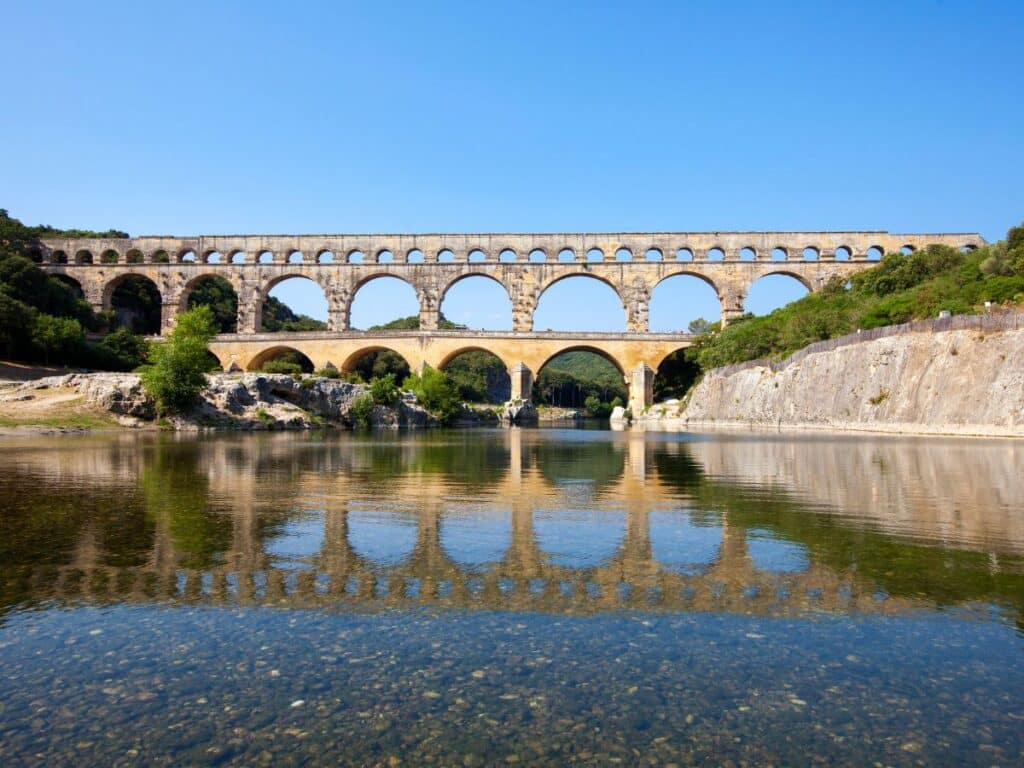
Just outside town is one of the most impressive Roman engineering feats still standing: the Pont du Gard. You can pair a visit to Uzès with a stop here if you’re driving. The aqueduct once carried water from a spring in Uzès to Nîmes and still appears capable of doing the job today. It’s one of those places that genuinely lives up to the photos.
Back in town, don’t miss the medieval Tour Fenestrelle, a round bell tower that leans slightly and adds a bit of quirky character to the skyline. If you’re up for a climb, the King’s Tower at the duchy offers views across the rooftops to the surrounding countryside.
Take a day trip to Pont du Gard with this small group tour >>>
Gordes
Gordes is about a 50-minute drive from Avignon, perched on the edge of the Luberon with one of the most photographed views in all of France. The town’s location was strategic long before it was scenic. It was a fortified hilltop village during the Middle Ages and still has its imposing château in the center. You can go inside, and although it has been updated over the years, some of the original 11th-century structure remains visible. The interior now doubles as a contemporary art gallery.

The real joy of Gordes is wandering. The stone buildings are built directly into the rock, and the alleys curve and climb in a way that makes it easy to get lost and enjoy the scenery. You’ll find galleries, linen shops, and cafés, and if you’re here in the morning, pick up a fougasse from the bakery and eat it on a bench with a view of the valley below.
One of the most unique spots nearby is the Village des Bories. It’s a short drive or a decent walk from the center and features a collection of dry-stone huts that shepherds and farmers once used. It offers a genuine glimpse into rural life centuries ago, and the craftsmanship is truly impressive.

If you’re visiting in July, the lavender fields of the Sénanque Abbey are right nearby, and when they’re in bloom, it’s worth the detour. The abbey itself is still home to a small community of monks and can be visited year-round, but the timing does make a difference.
Take a day trip to the villages of the Luberon, including Gordes >>>
Roussillon
Roussillon is about an hour from Avignon by car, and it’s worth every minute of the drive. What makes this place stand out is its vibrant color palette. The buildings are painted in shades of ochre, from deep reds to warm yellows, giving the whole village a glow that changes with the light. It’s not subtle, but it’s natural. The color comes from the earth itself.

The ochre deposits here were once mined on a large scale, and today you can still walk through the old quarries on the Sentier des Ocres. It’s an easy, signposted trail that loops through the bright cliffs and pine forest, giving you a real sense of how the landscape shaped the town. Bring good shoes if you plan to walk it. The red dust gets everywhere, so I wouldn’t advise wearing white, but it’s worth it.
Roussillon sits on the edge of the Luberon, offering sweeping views of the surrounding countryside. You don’t need a list of landmarks here. Just wander. The streets wind uphill past small art studios and craft shops that seem untouched by time.

There’s a small but interesting ochre museum in a former factory if you want to dive into the history a bit more. It explains how ochre was processed and used, not just in paints, but also in building and textiles.
For lunch or a drink, aim for one of the places with a terrace looking out over the valley. They’re not always cheap, but you’re paying for the view and the setting, and boy, is it worth it.
Take a day trip to Roussillon from Avignon >>>
Les Baux-de-Provence
Les Baux-de-Provence is just under an hour from Avignon by car and set high in the Alpilles, with views that stretch all the way to the Camargue on a clear day. This hilltop village was once a stronghold of powerful lords who ruled much of the surrounding region during the Middle Ages.

The remains of their fortress still dominate the site. You can walk through the Château des Baux and get a real sense of the scale, with crumbling towers, catapults, and open spaces that look like they haven’t changed much in centuries.
Below the ruins, the village itself is pedestrian-only, with narrow stone lanes, galleries, and shops that sell local products, including olive oil and tapenade. It’s compact, and in the summer, it gets busy, so it’s worth arriving early to avoid the crowds.

Just down the hill is the Carrières des Lumières, a former limestone quarry turned into an immersive art experience. Famous artworks are projected onto the quarry walls, set to music, and the result is surprisingly powerful. Even if you’re not usually into that sort of thing, this one tends to convert skeptics. Show times change yearly, so it’s worth checking the schedule before you go.
Take a day trip to Arles, Les Baux-de-Provence & Saint-Rém. Departing from Avignon
Fontaine-de-Vaucluse
Fontaine-de-Vaucluse is about 45 minutes from Avignon by car and offers something different from the hilltop villages and Roman ruins. This one is all about water.
The town is named after the source of the Sorgue River, which bursts out from the base of a cliff at the end of a narrow gorge. It’s one of the largest natural springs in Europe, and the volume of water that flows out is impressive. You can walk right up to the pool where it emerges. When the water level is high, it’s dramatic. When it’s lower, you can see straight down into the rocky depths.

Historically, the water powered mills were all along the river. You’ll still find a few working waterwheels and a small museum dedicated to paper-making, which was once a big industry here. It’s not a big museum, but it’s hands-on and gives a clear idea of how things worked in centuries past.
The poet Petrarch lived here in the 14th century, drawn to the peaceful setting. His presence lent the place a touch of literary fame, and there’s a small museum dedicated to him, although the real appeal remains in the setting itself.
The walk from the town to the spring is easy and scenic, with the river on one side and cliffs on the other. If you’re there in the warmer months, you’ll see kayakers paddling downstream toward L’Isle-sur-la-Sorgue, another gorgeous place to add to your list.
Take a day trip to Fontaine-de-Vaucluse and other Luberon villages >>>
Arles
Arles is just under an hour from Avignon by car or train, and it’s one of the bigger towns on this list. If you’re interested in Roman history, this is where you’ll want to spend a whole day. The Roman amphitheater in the center still hosts events and concerts, and you can walk through the stands and tunnels without needing much imagination to picture what it once looked like.

There’s also a Roman theater, baths, and a museum with a Roman barge that was pulled from the Rhône River, still surprisingly intact. You could easily spend a couple of hours in the museum alone if archaeology’s your thing.
Arles was once home to Vincent van Gogh for over a year, and even though none of the buildings from his paintings survive exactly as they were, there’s a walking trail that marks the locations of his most famous works. The Fondation Vincent van Gogh is a small gallery that features changing exhibitions, sometimes showcasing his work alongside that of contemporary artists.

The center of Arles features a mix of Roman, medieval, and 19th-century buildings, accompanied by numerous small cafés and quiet corners where you can sit with a coffee and watch the pace of life slow down.
If you’re visiting in July, Arles hosts the International Photography Festival, which spills out into unusual venues all across town. It’s one of the biggest of its kind and draws photographers from all over the world.
Take a private tour of Arles >>>
TRAVELLING TO FRANCE?
Here are my favourite resources I use each time I travel!
🧳 I always protected my trips with this travel insurance company when I lived in the US AND this one now I live in Europe
🚘 I found a car rental for $500 less than traditional sites with this car rental agency
🚌 🍷 My favourite platform to find Day Trips and Wine Tours in France at the best price and with great reviews
🚂 The cheapest train tickets are always on this App
🏨 I got a 20% discount on a chateau hotel with this hotel booking tool
I personally use these sites myself and if you use them, they will earn me a small commission at no extra cost to you. This helps reduce the ever-increasing cost of maintaining my blog and writing about France. Thank you!